
ByJohn A
The Everyday Convenience of Roller Insect Screens
Insect screens have come a very long way from the fixed panels that many people still picture when the subject comes up. Among the most popular modern designs is one that quietly rolls out of sight the moment it is no longer needed, offering all the protection of a conventional screen with none of the permanence. For a great many homes it strikes exactly the right balance.
The appeal is refreshingly simple. You get a reliable barrier against flies and midges precisely when you want one, and a completely unobstructed window when you do not. It is a small piece of everyday cleverness that makes the warmer months noticeably easier to enjoy.
How the design works
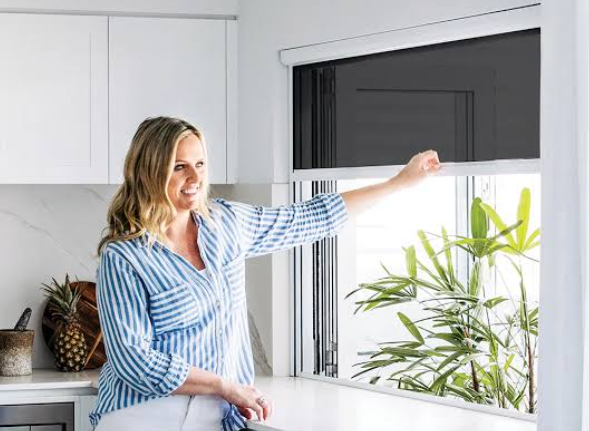
The principle is much the same as a roller blind, which is why most people grasp it immediately. The mesh is housed inside a slim cassette fitted to the frame, and it pulls down or across to cover the opening before retracting smoothly back into its housing when released. Roller fly screens make protecting a window an effortless, one handed job.
Because the mesh rolls away completely rather than sitting exposed, it is protected from sunlight, rain, and general wear whenever it is not actually in use. That tucked away design is a large part of why this style tends to last noticeably longer than a screen left permanently stretched across an opening year round.
Protection only when you want it
The great advantage of a design that retracts is the flexibility it offers through a changeable season. On a cool, grey day when the window stays firmly shut, the mesh disappears entirely, leaving a clear view and the full amount of daylight coming into the room.
On a warm evening it pulls down in a second or two and the insects stay outside. This suits the way most of us actually live, opening the house up when the weather is fine and closing it down again when it turns. There is no seasonal ritual of removing panels in autumn and hunting for them again in spring.
Fitting and placement
Because the cassette sits on the frame, it is genuinely worth thinking about placement before anything is fixed in position. A side mounted design suits a window that is opened by reaching across, while a top mounted version works better where the opening is tall and narrow rather than wide.
Access matters just as much as orientation. A screen that has to be reached over a sink, a worktop, or a radiator quickly becomes a nuisance nobody bothers with, so positioning the pull handle within comfortable reach makes a real difference to how often it actually gets used. These are small decisions, but they shape the everyday experience considerably.
Built for daily use
A screen that is operated every day through the summer needs to be genuinely dependable, and rolling designs are engineered with that expectation in mind. Smooth mechanisms and good quality materials mean they glide up and down reliably, week after week, without sticking halfway or jamming at the worst possible moment.
Maintenance is refreshingly minimal. An occasional wipe keeps the mesh clean and clear, and because it spends the majority of its life safely rolled away inside the cassette, there is very little opportunity for accidental damage. For most households this amounts to a few minutes of attention once a year.
Suited to a range of window types
One of the quieter strengths of this design is how widely it can be applied. Casement windows, tilt and turn windows, and many awkwardly shaped openings can all be accommodated, because the cassette simply mounts to the frame rather than needing to sit within the opening itself.
That flexibility makes it a practical choice in properties where the windows vary from room to room, which is the case in a great many older homes. Rather than hunting for several different solutions, a single style can often be applied throughout, keeping both the appearance and the operation consistent across the house.
Neat, discreet, and easy on the eye
Appearance is a substantial part of the appeal for most buyers. When fully retracted, all that remains visible is a slim cassette running along the frame, so the window looks entirely normal to anyone glancing at it. Well chosen roller fly screens for windows are among the most discreet options available anywhere.
Available in a range of finishes chosen to match the frame, they blend into their surroundings rather than standing out against them. For anyone who has hesitated over screening because they were reluctant to alter the look of their windows, this understated approach is very often the thing that finally convinces them.
See also: The Role of Consensus in Crypto Protocols
The best of both worlds
This kind of screen offers a genuinely practical compromise: full insect protection exactly when it is needed, and a clear, unobstructed window the rest of the time. It is difficult to argue with a solution quite that tidy, particularly one that asks so little in return.
For households that want the benefits of screening without accepting any visual compromise, it is very often the natural choice. Convenience and discretion rarely come together quite so neatly in a single product, which is precisely why this design has become so popular.
